24 August 2013

San Diego Comic Con 2013: Anime and Manga Make Their Mark


The mass appeal of anime and manga continue to grow, as fans witnessed during the 2013 San Diego Comic Con. Represented at the event were panels for such favorites as "Blue Exorcist" and "Attack on Titan." Although many popular anime series represented at Comic Con are currently on hiatus, their return is imminent. In the meantime, viewers can watch Anime Network available through http://www.directstartv.org to tide them over. Get ready to bask in the satisfaction of knowing that great things are in store for your favorite anime and manga series.
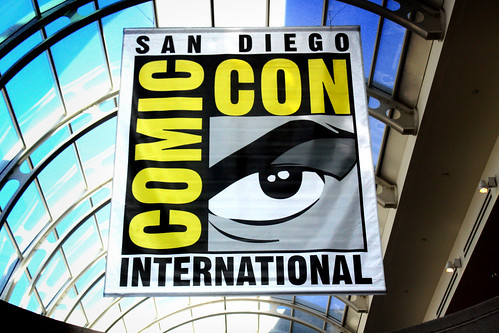
San Diego Comic-Con sign

Photo by Flickr user Gage Skidmore

The Best And Worst Manga


Few panels are likely to stir as much excitement and controversy as "The Best and Worst Manga." After all, even the name of the panel is apt to rile up attendees. And such was certainly the case with this gathering of manga fans, lead by Deb Aoki of Mangacomicsmanga.com, David Brothers of Comics Alliance and Christopher Butcher of The Toronto Comic Arts Festival, among others. During their time together, these manga experts discussed exciting new developments in the genre, pointing to such current hits as Hajime Isayama's "Attack on Titan," as well as Natsume Ono's "Danza."

Stirring up a bit of resentment among some manga fans, the panel also pointed out the manga creations that most disgusted them, including Mayu Shinji's "Demon Love Spell" and Tite Kubo's "Bleach." As the Anime News Network points out, the panelists at San Diego Comic Con may not appreciate these works, but dedicated fan bases were incredibly upset to hear that their favorites were included among the "worst" manga.

1

Photo by Flickr user suyueinoue

Viz Media


One of the more prominent entertainment companies involved in the creation of anime and manga, Viz Media held a very prominent panel at this year's San Diego Comic Con. The purpose of this panel was to highlight new developments related to the entertainment company while also providing feedback on some of fans' most frequent queries. First, panelists introduced a long list of new titles slated to debut soon, including adventure manga "Maji!" and josei manga "Midnight Secretary." Additionally, Publisher's Weekly commended Viz Media on the debut of VizKids, a comprehensive children's publishing platform highlighted at Comic Con. Between VizKids and the many new titles mentioned by Viz Media, this entertainment company clearly has a vibrant future.

Anime Cosplay


Obviously, San Diego Comic Con would be nothing but a bunch of droll media reports if not for the presence of all kinds of impressive cosplay fanatics. Traditionally, cosplay has centered on popular television series and movies such as "Star Trek" and "Doctor Who." But that emphasis on British and American media offerings is beginning to disappear, with international characters making their presence known in Comic Con cosplay.

Anime and manga were particularly well represented at San Diego Comic Con's cosplay this year, with characters from "Naruto" proving especially popular among costumed individuals. "Soul Eater" and "Vampire Knight" costumes also made frequent appearances. These vibrant costumes added quite a bit of interest to what proved to be an incredibly successful 2013 Comic Con.

21 August 2013

ID project: Third Generation Geekery with Jed Blue


Some geeks are born, not made.

I am not one of them- I came to my hobbies through fantasy novels, Saturday morning cartoons, and a love of ancient history. But some members of the community are brought in by parents with the same interests these now-proud geeks possess, and find their passions nurtured by a family dynamic that allows them to thrive. For some of these native-born geeks, fandom and the associated pursuits are the norm, everything else lies outside it. 

Jed A Blue, the founder and ruminator behind My Little Po-Mo, is one of these "native geeks." In this week's ID project, he recounts how he is a product of a geeky upbringing, and how it has shaped who he is. I've known Jed since roughly 2009, when we crossed paths at Anime USA, through a shared love of both anime and analysis. Since then, I've watched him present on a variety of topics, and wax (both poetically and philosophically) about what he loves. 
______________________________________________

13 August 2013

50 Years of Anime Openings- 20 Years of Otakon/2013 Edition

A bit delayed in posting this list, as my internet was spotty for a few days. Aside from the few hundred emails I need to check, I also know a few of them were specifically asking for this list.

Despite being close to the TMR concert, and scheduled up against a few solid panels (like WWII in Anime), the turnout was pretty good, and hopefully the crowd learned a few things about limited-animation and the evolution of the opening sequence. Hopefully everyone who came by had a good time.


Unlike previous cons, I didn't split this panel into categories, but rather ran it as a single, long chronology from 1963-2013. I did include a lot of the "sub-group" openings from Atmosphere, Cast and Music, and even managed a few fan-crafted examples as the decades flew by.


EDIT: In hindsight, perhaps I should have left it in the original format. If only to highlight how many of the OPs relate to each other over time, rather than displaying how everything itself progressed. Oh well, live and learn.

01 August 2013

a medium evolves: electric kamishibai and the roots of anime


Despite its ‘reputation’ as ‘poor theatre,’ (which was a result of the economic times and the “necessity” of the storytellers to pursue such a ‘career’) kamishibai was also recognized as one of the few dedicated methods of children’s entertainment during the postwar period. At a time when even childhood literacy was declining, and books were themselves in short supply, the arrival of storytellers to spend time entertaining the youth could have been seen as a welcome change of pace during those darker days following the war. 

Of course, that did little to discourage critics at the time, who occasionally equated the kamishibai performers to little more than beggars, and questioned both their values and the quality of the “threatre” they practiced. While from a modern standpoint, kamishibai might be embraced as an alternative to traditional acting and storytelling, at the time it was condemned as ‘harmful’ to the same children who embraced and “ate up” the stories they were being told. Remember again, this was a different Japan than the Edo culture that thrived on alternative means of performance, and the Meiji that glorified “indigenous” methods of storytelling and a “return to Japanese cultural heritage” that allowed them to make their own identity in a global community.